Techniques
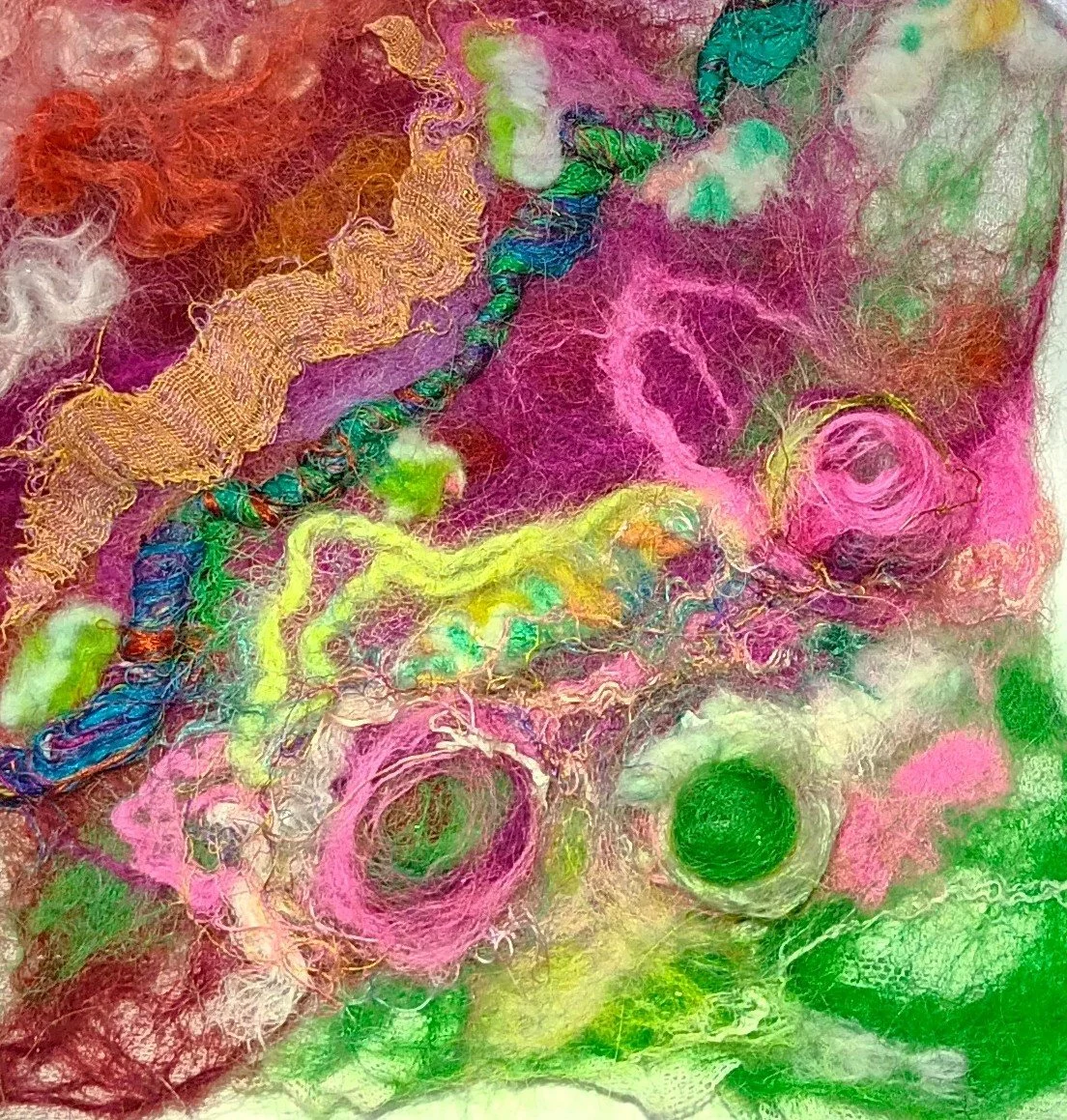
Textured Surface Design in Nuno Felting
Nuno means cloth in Japanese. Combining wool with silk or other fabrics such as lace, allows for texture to be built up. It is possible to create many relief effects, adding great interest and surface design. This technique allows for experimentation with a range of materials and teaches how to create special effects. This is a wet felting technique, that is quick and produces truly stunning results. It is great fun too.
Vases
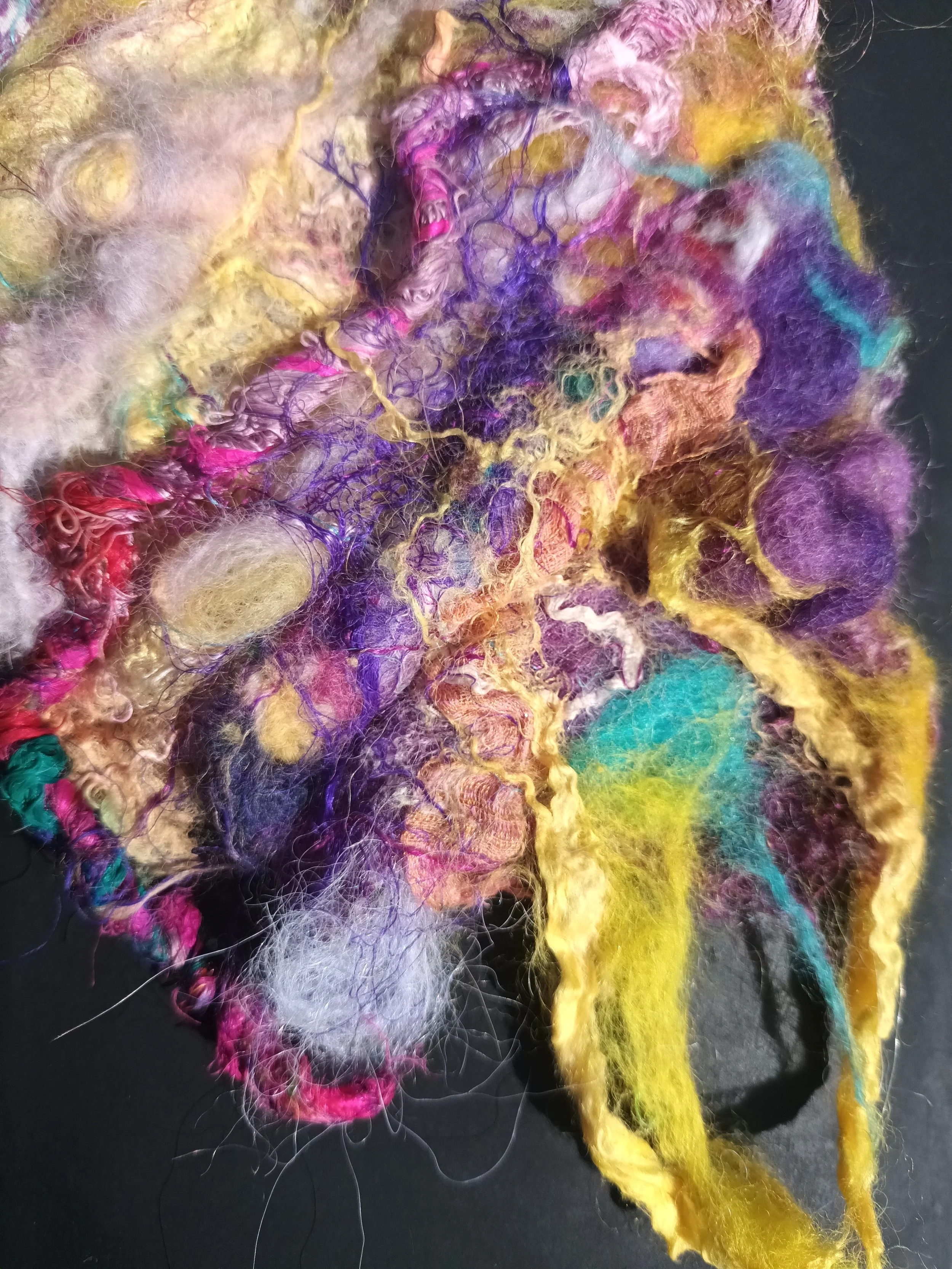
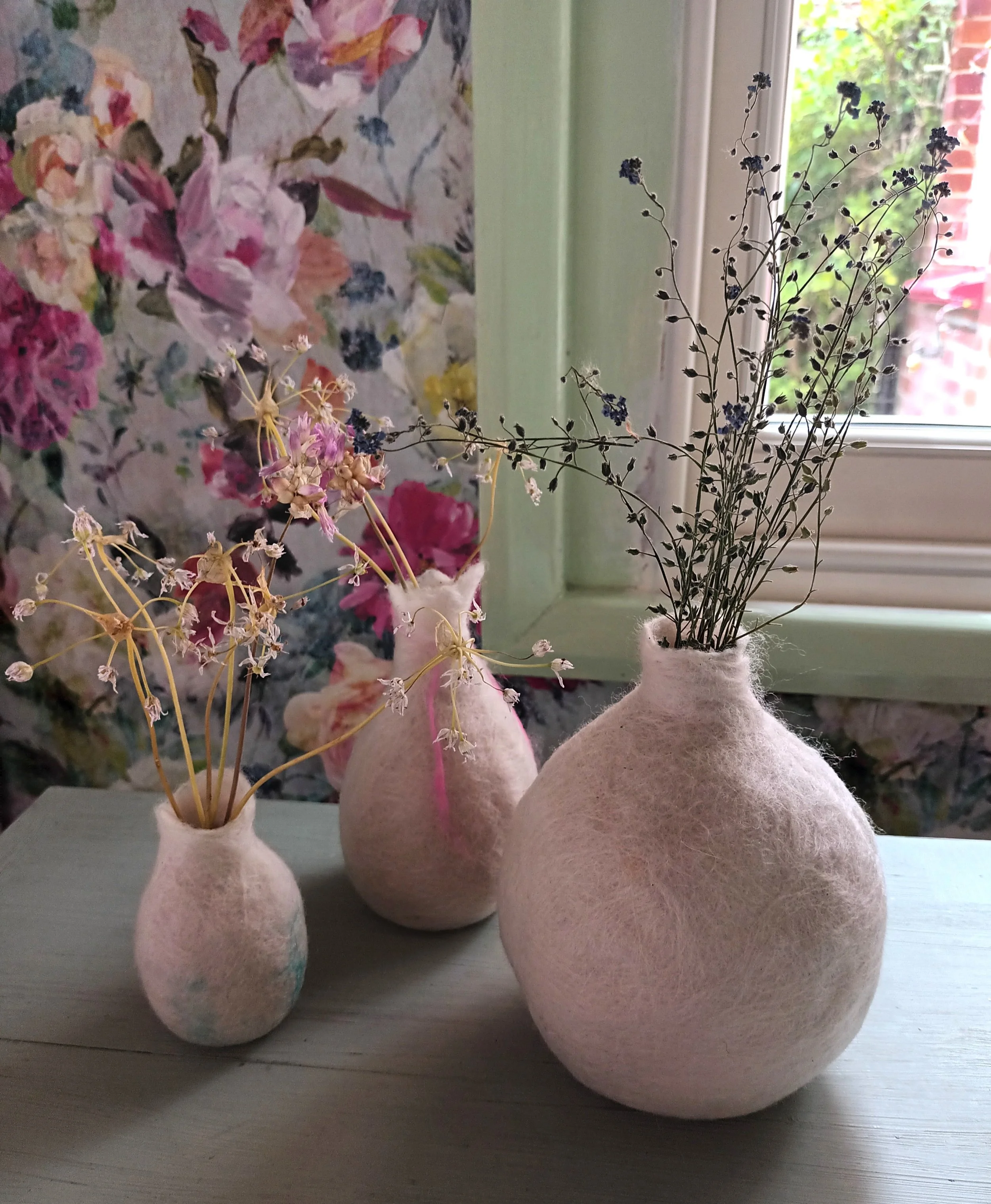
The vases are made by wet felting around a resist, either a strong balloon or a ball. The vase is formed by placing merino wool tops or alpaca fibres onto the resist. Once the shape has been made and the neck of the vase shaped, more wool and silk/banana fibres are added to create the surface decoration. The vase is then felted by rolling on a bamboo mat. Once dry, the balloon or ball can be removed. They look great containing dried flowers.
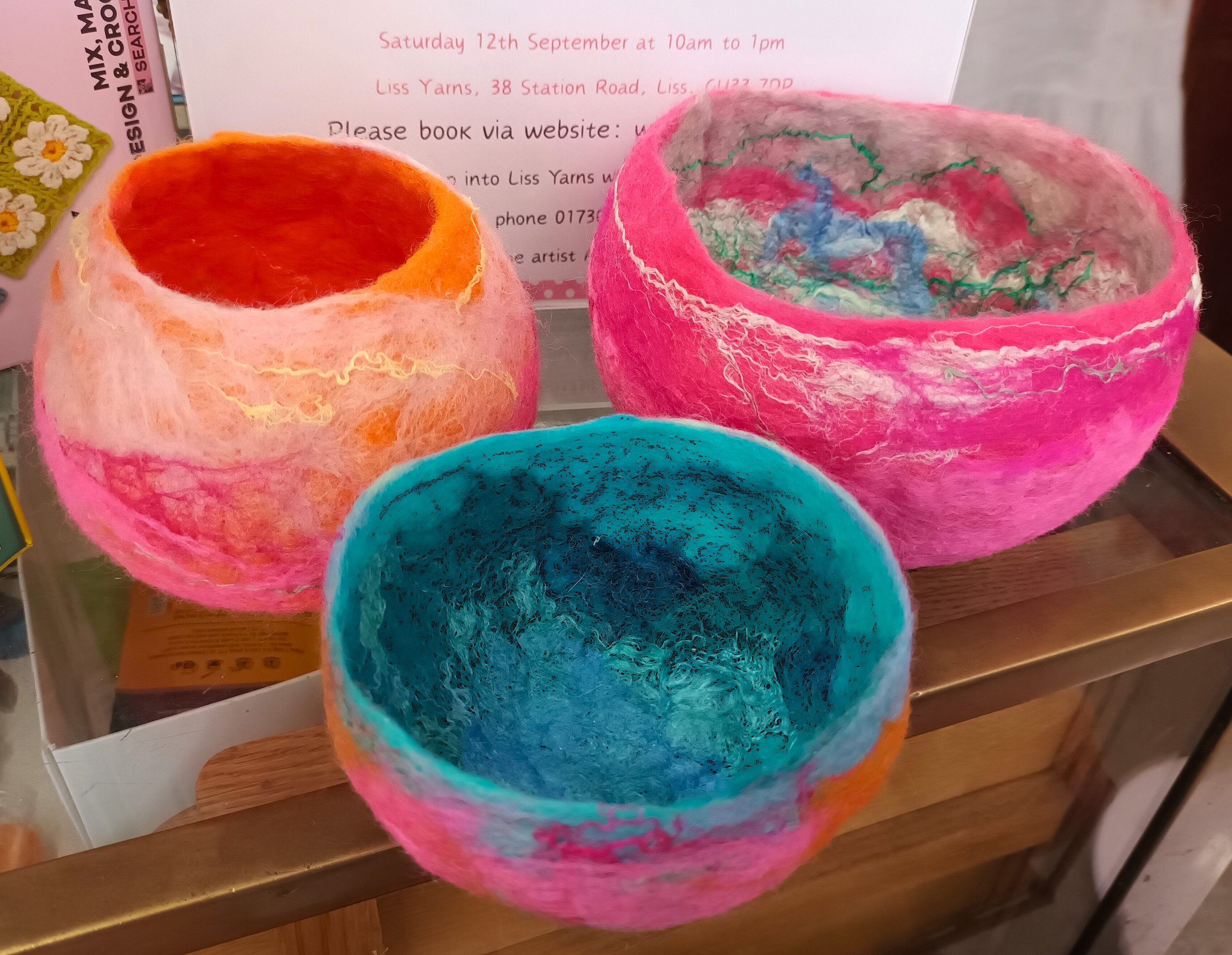
Bowls, Pots and Lanterns
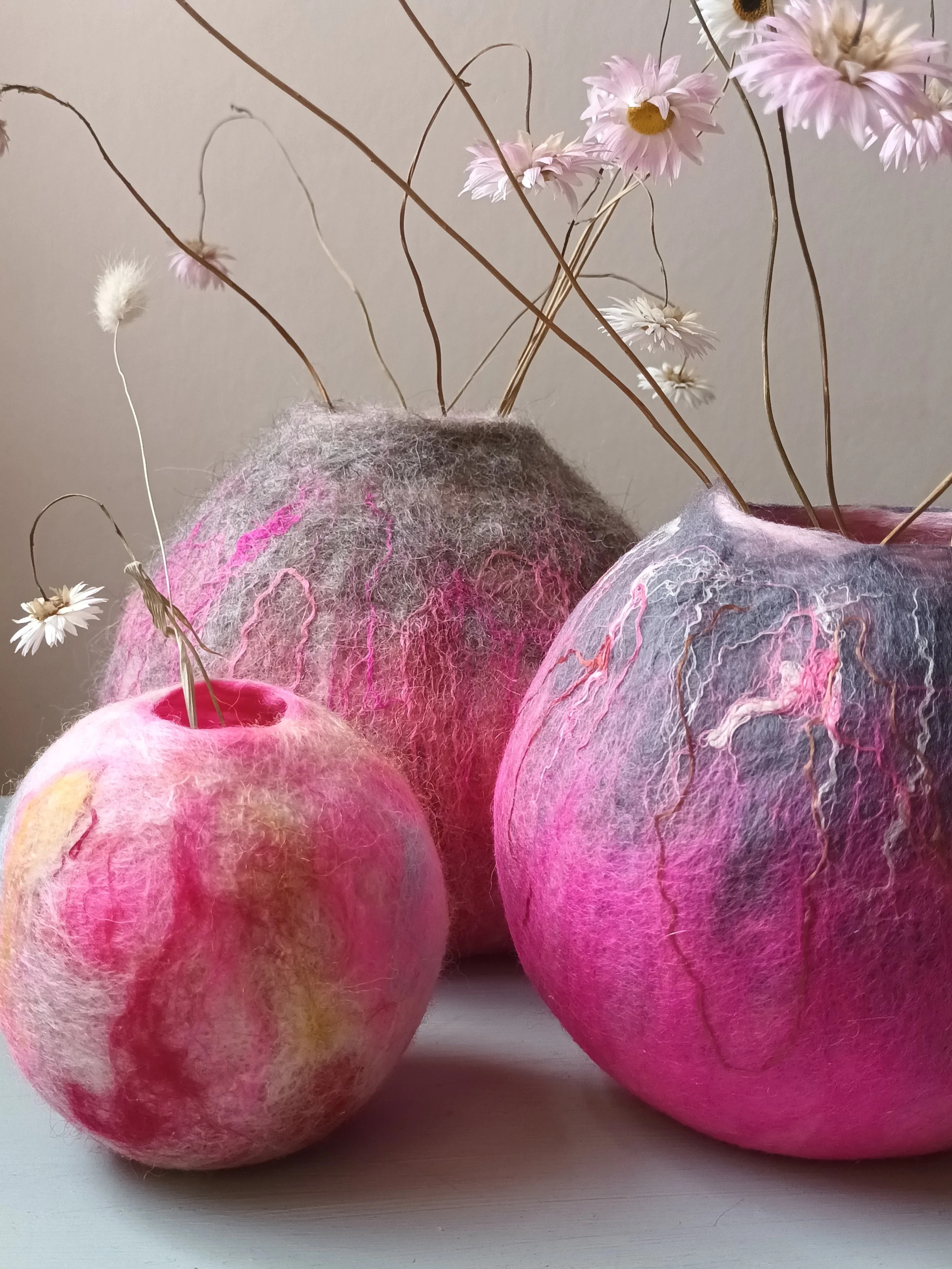
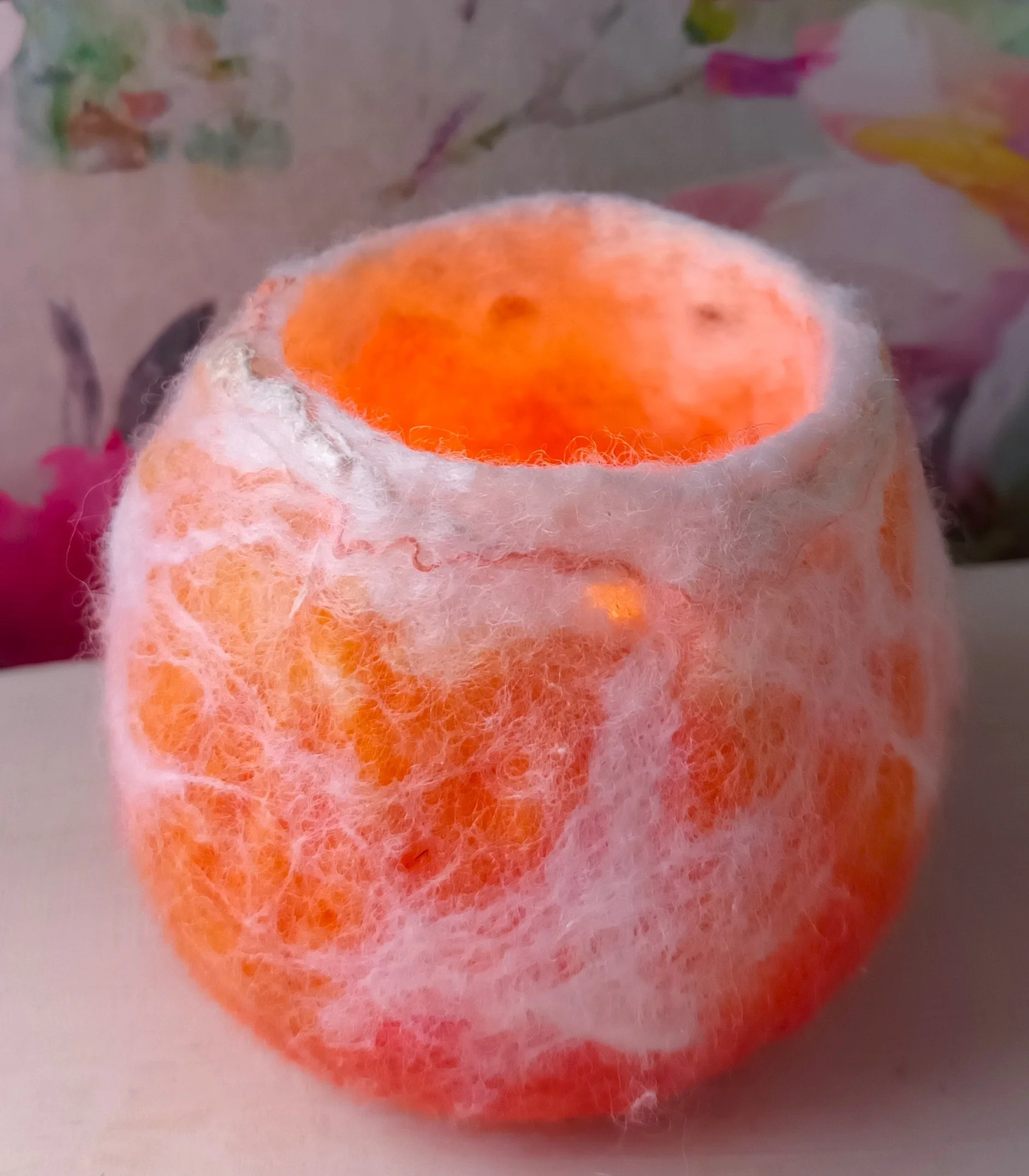
Handmade, over sized and misshaped juggling balls are used as a resist to make the bowls, pots and lanterns. Adrienne has sewn each ball herself, and they have been cleverly designed to produce specific shapes and sizes of bowls, pots and lanterns when used as a resist. Holes can be added to allow light to shine through.
Firstly, silks are added to the ball, to begin forming the inside of the structure and give it luminosity. Merino wool tops are then added to complete the structure. Silk and wool then provide the surface decoration.
Felting takes place by rolling on a bamboo mat with soap and water. This process is speeded up by the material on the inside of the juggling ball.
Making material and needle felting
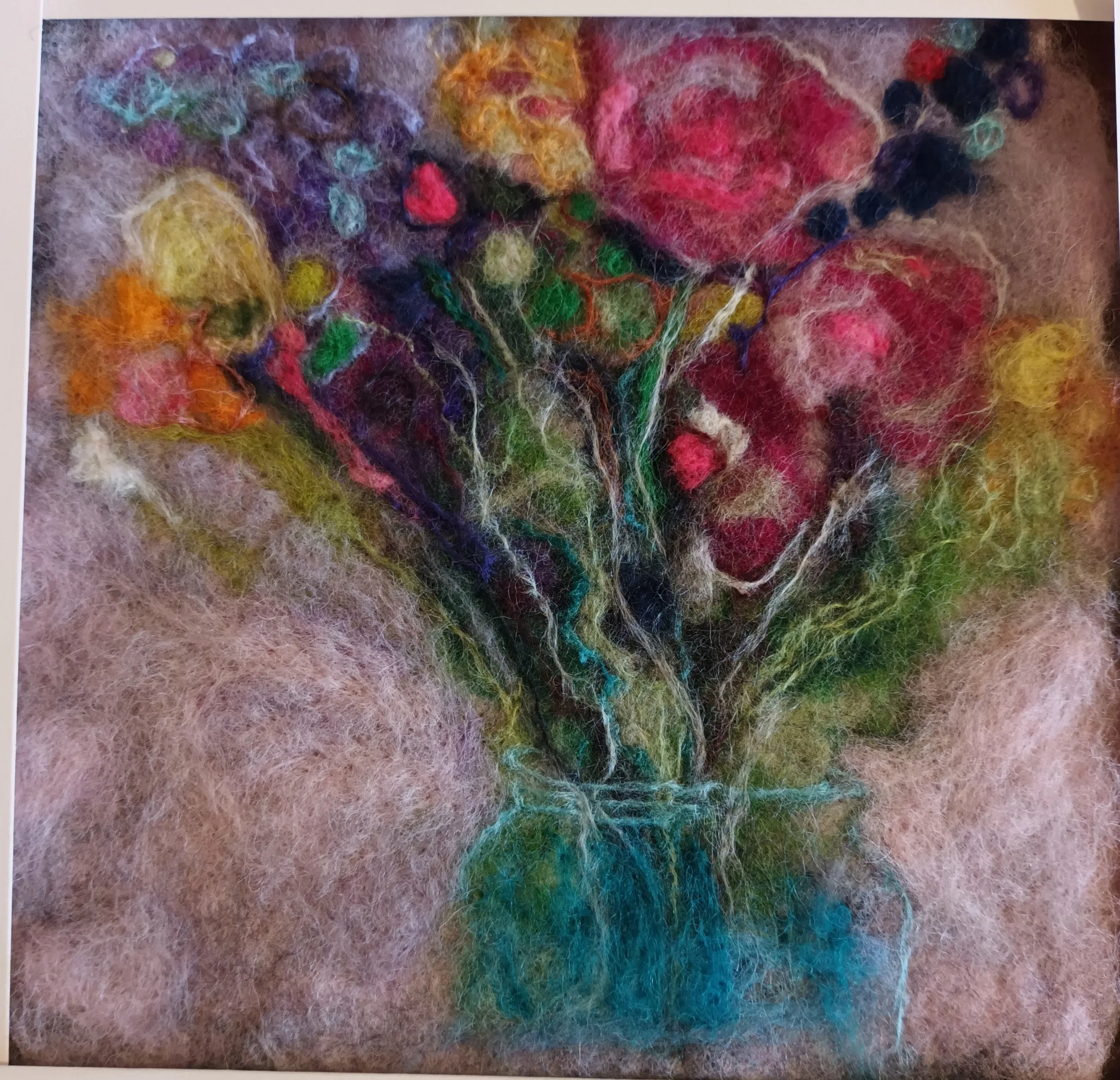
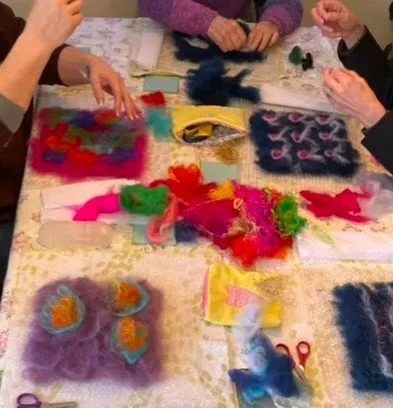
By laying merino wool tops on a mat and agitating with soapy water, a piece of material can be made. This can be abstract, have a motif or be representative. This could be used as a place mat, used to make a cushion or be displayed. It could be cut up to make something. Additionally, embroidery can be added.
Needle felting can also be added to the felt material as in the example shown here.
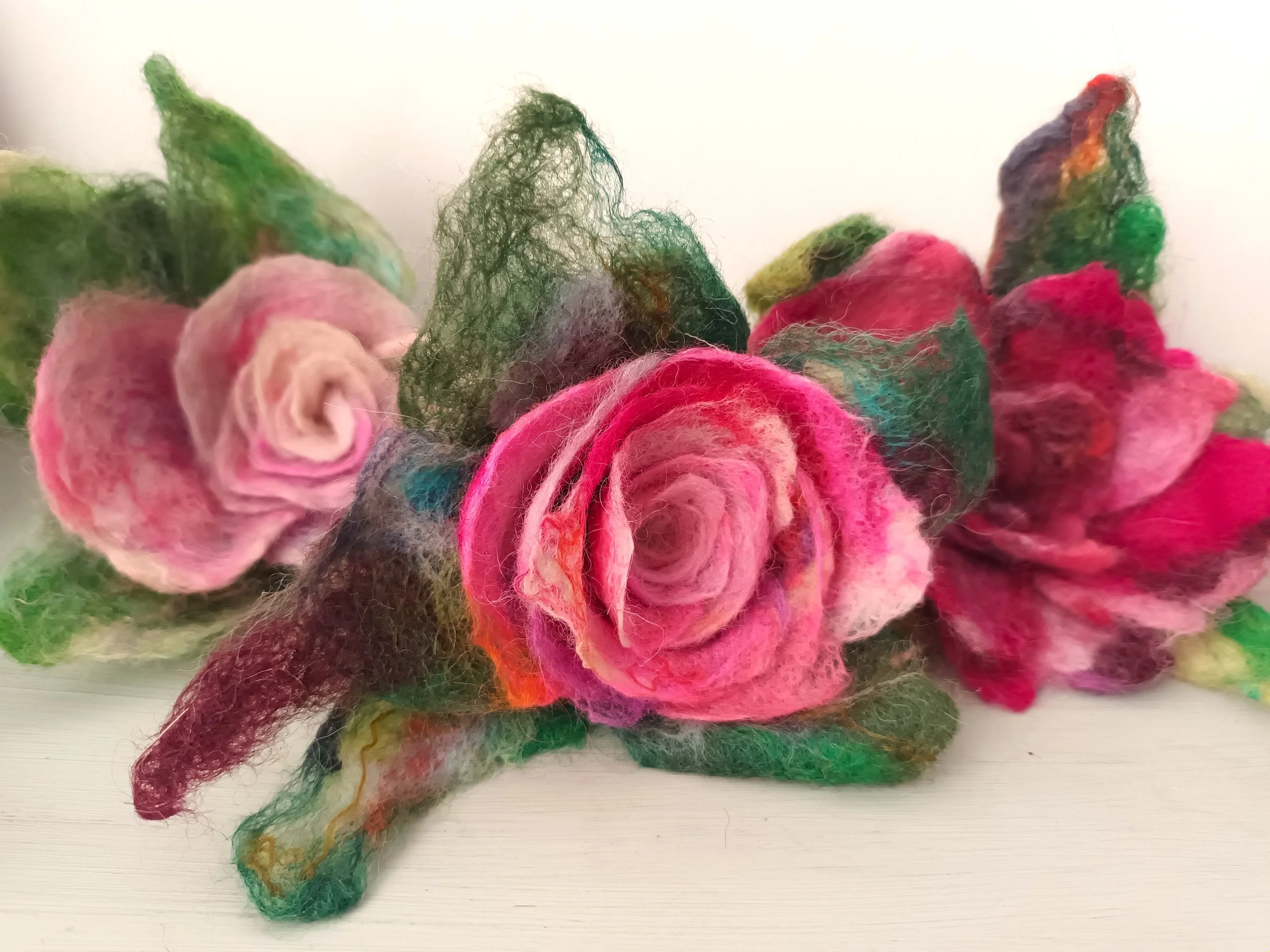
Magical Felted Flowers
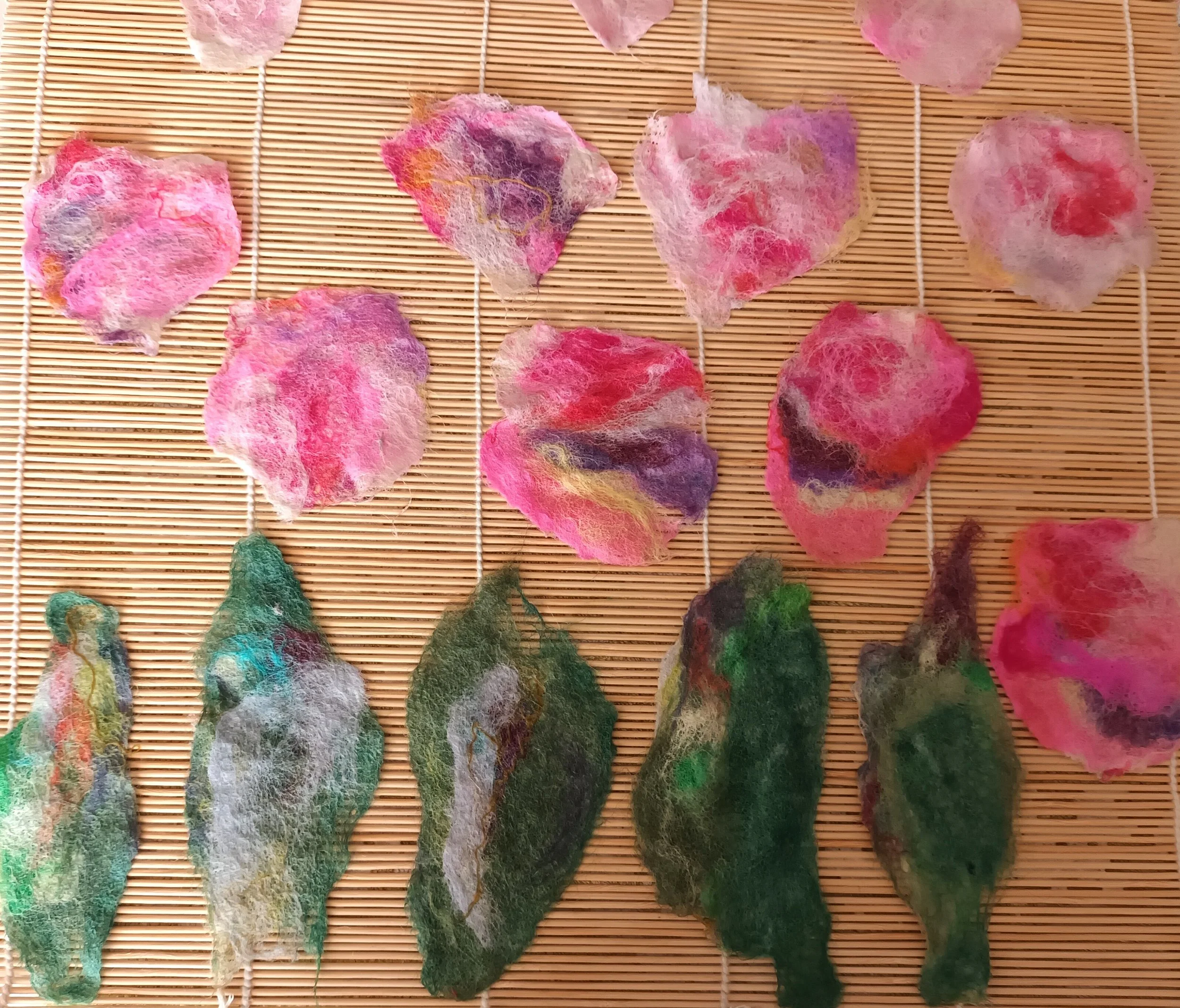
To make a felt flower, many colours of beautiful merino wool tops are blended to make individual petals and leaves. Adding small amounts of different colours and some silk, allows the petals to have a natural feel. Subtle colour variations can have a big impact.
The leaves and the petals are wrapped together around a specially made stick and parts of the leaves and petals felt together using a wet felting technique. Once the stick is removed, the felt flower retains its’ shape and form. It is quite a magical process.
They look particularly good worn as brooches or hair accessories.

Needle Felted Decorations
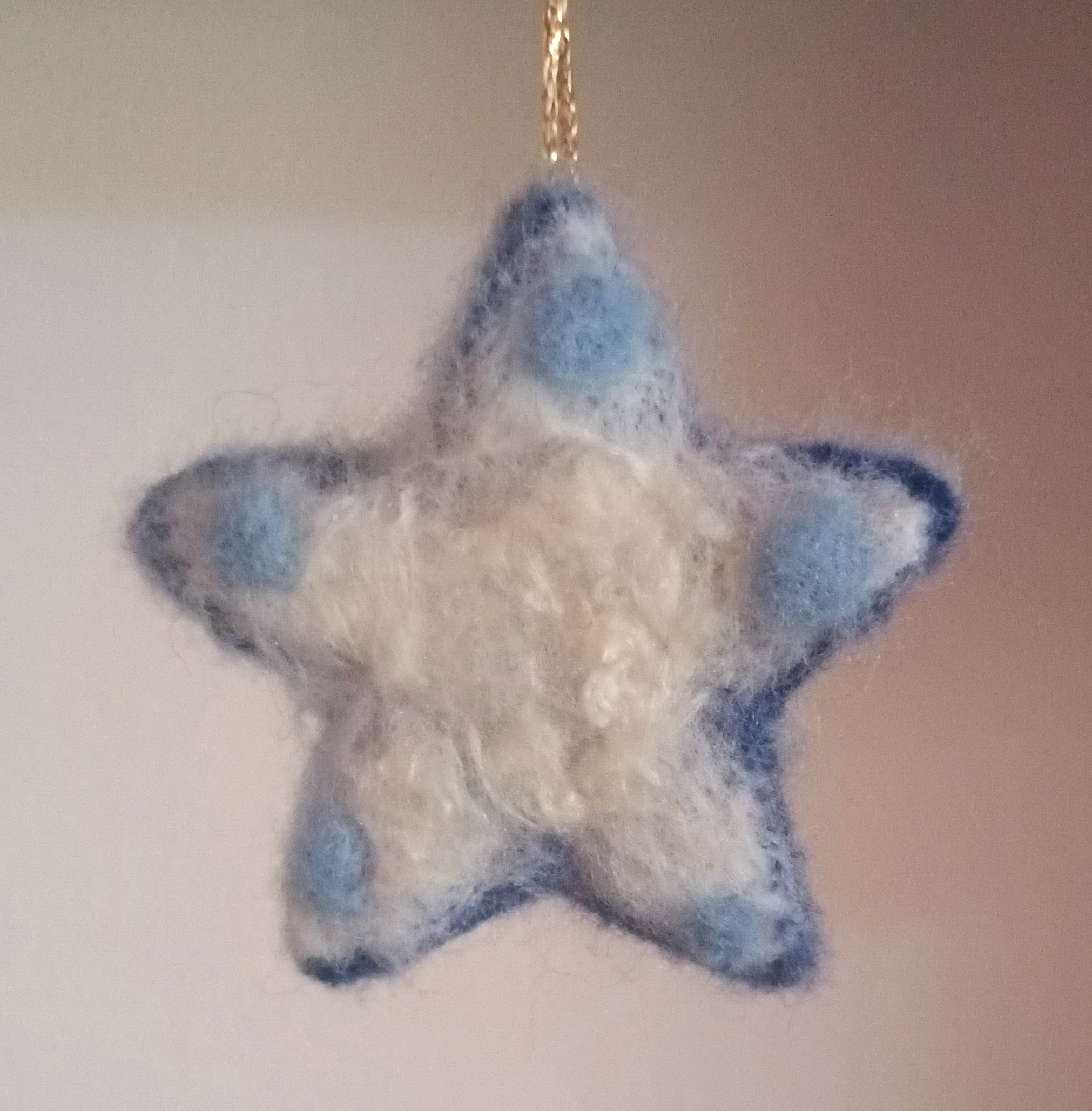
Adrienne teaches two methods of making needle felted decorations. The hearts on the left, are made by placing merino wool tops or alpaca fibres into a mould and then repeatedly stabbing them with a barbed needle, for the felting process to take place. A string can be attached during the felting process allowing them to be hung up.
The star on the right is made by using a stencil and cutting out two pieces of felted material. Merino wool tops are then added and needle felted on to the material. The two pieces are then attached by more needle felting and a string is attached to hang them.
Silks can be added to both to create greater luminosity.
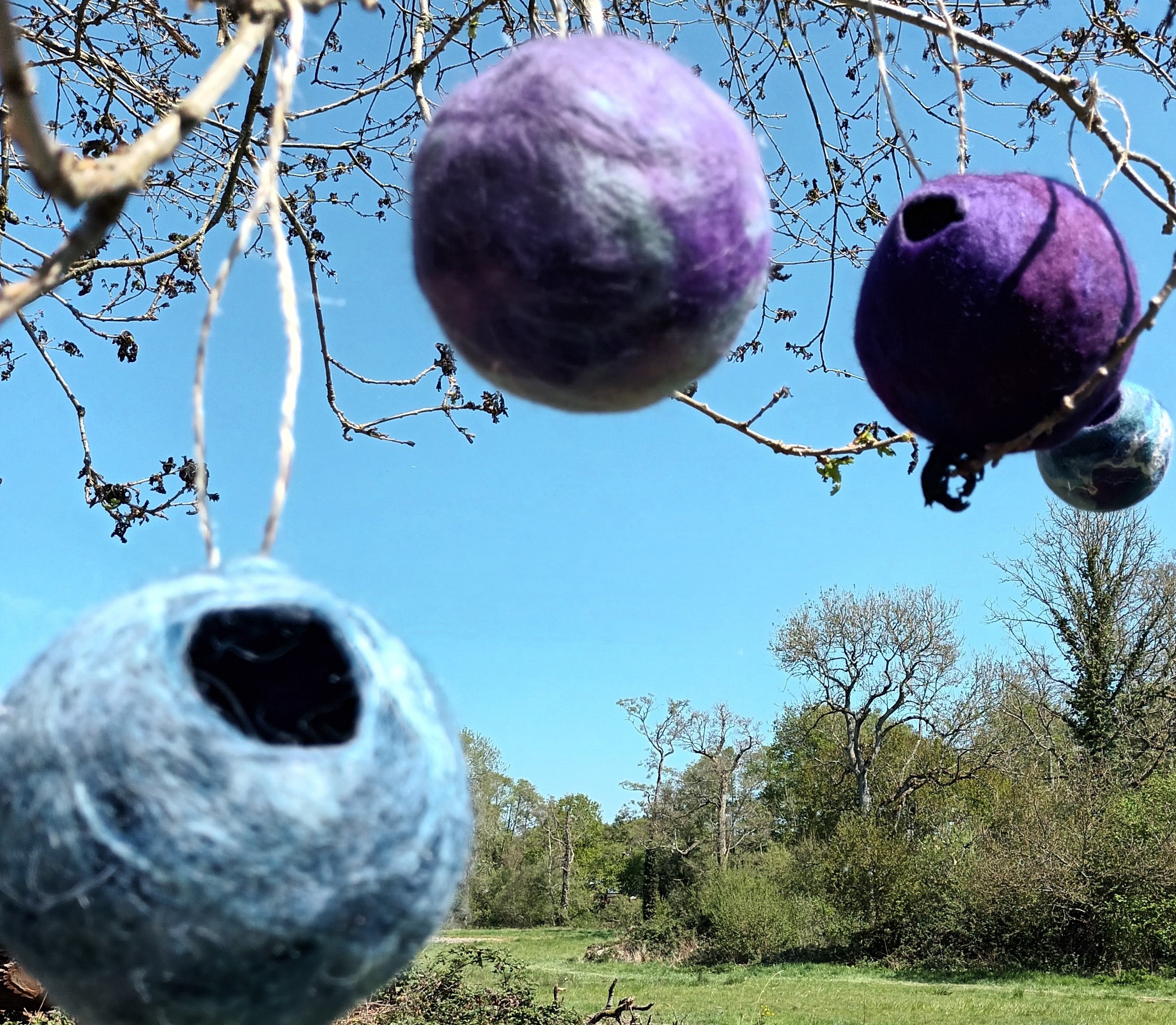
Birdhouses
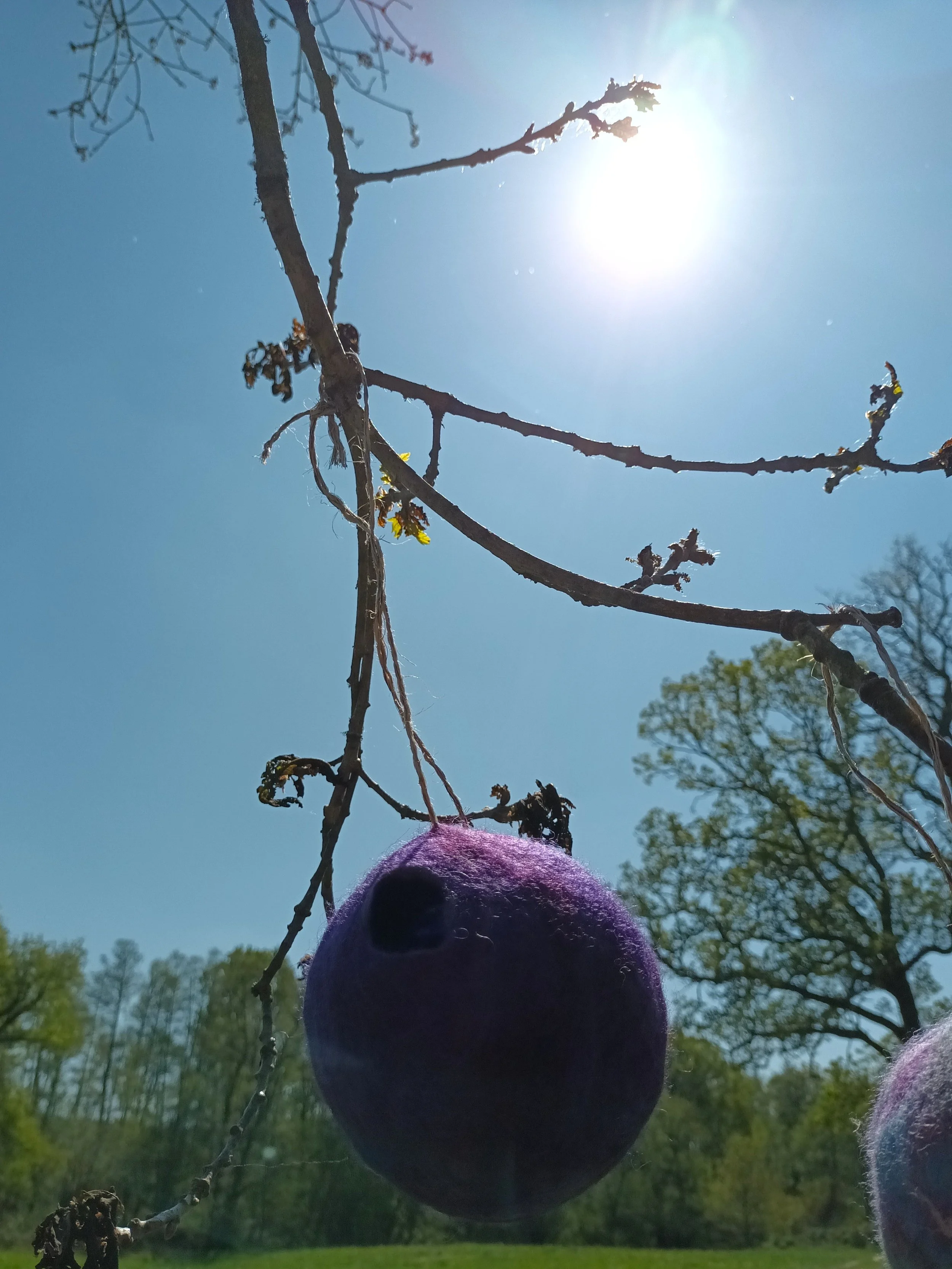
The birdhouses are made around a strong balloon. Merino wool tops are placed over the balloon to form structure and shape. The outside of the birdhouse is then decorated with wool and silk. Rolling on a bamboo mat, with soapy water,, agitates the fibres until they felt together.
Once dry, the balloon is then removed and a piece of twine can be attached to hang the birdhouse. They look very elegant in the garden, whether they have a bird in them or not.
Beginners Drawing Workshop
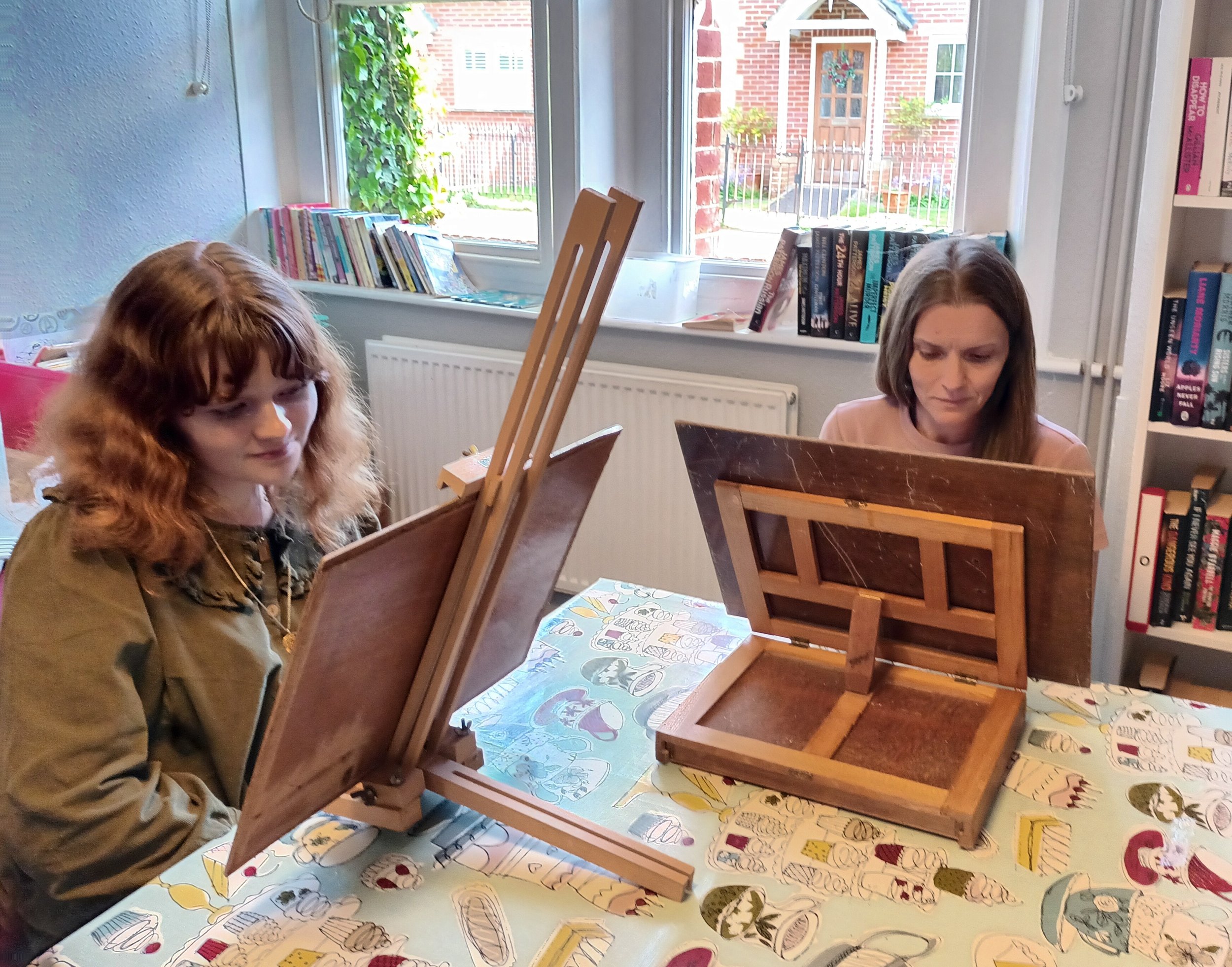
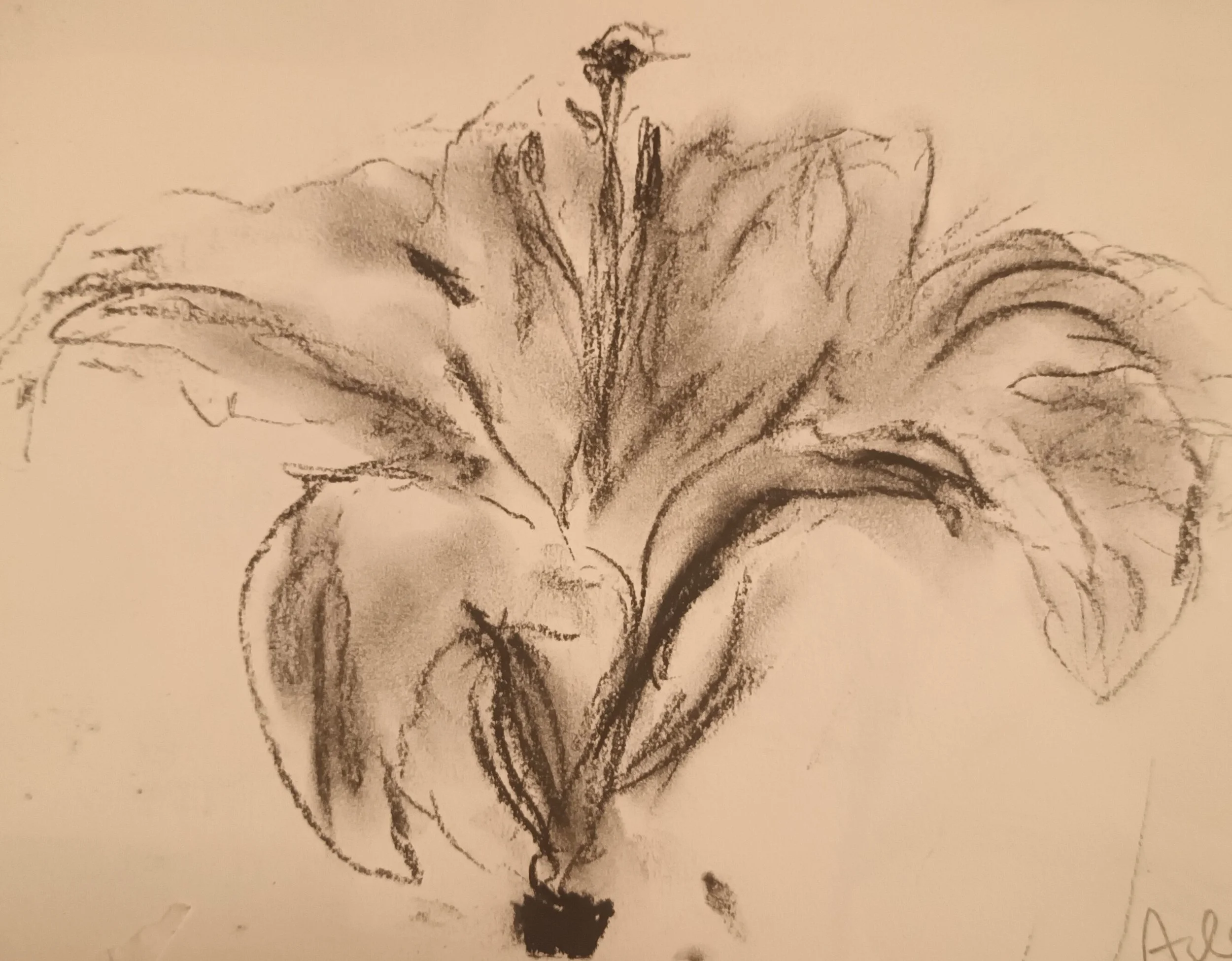
Adrienne understands that it can be difficult to get started with drawing. This relaxed workshop helps build confidence. Looking at some real lilies in a vase, the workshop moves through a series of drawing techniques, from taking a line for a walk and keeping your eyes on the flower, to making a series of 1, 2 3, 5, and 10 minute drawings looking at line, tone and form. White lilies lend themselves to this by their nature.
Pencils, charcoal, pastels and putty rubbers are supplied along with a range of papers.
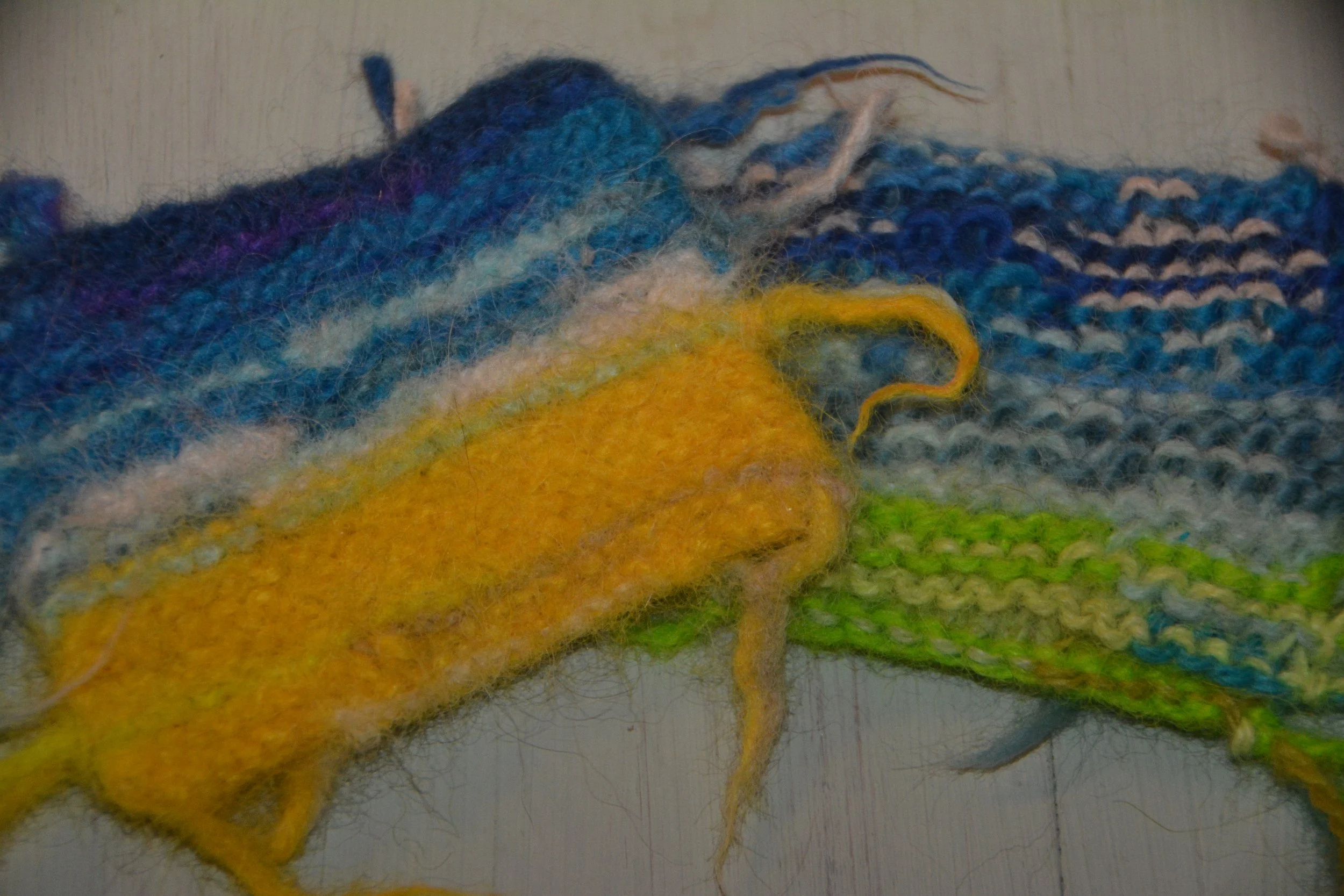
Learn to knit a felted landscape
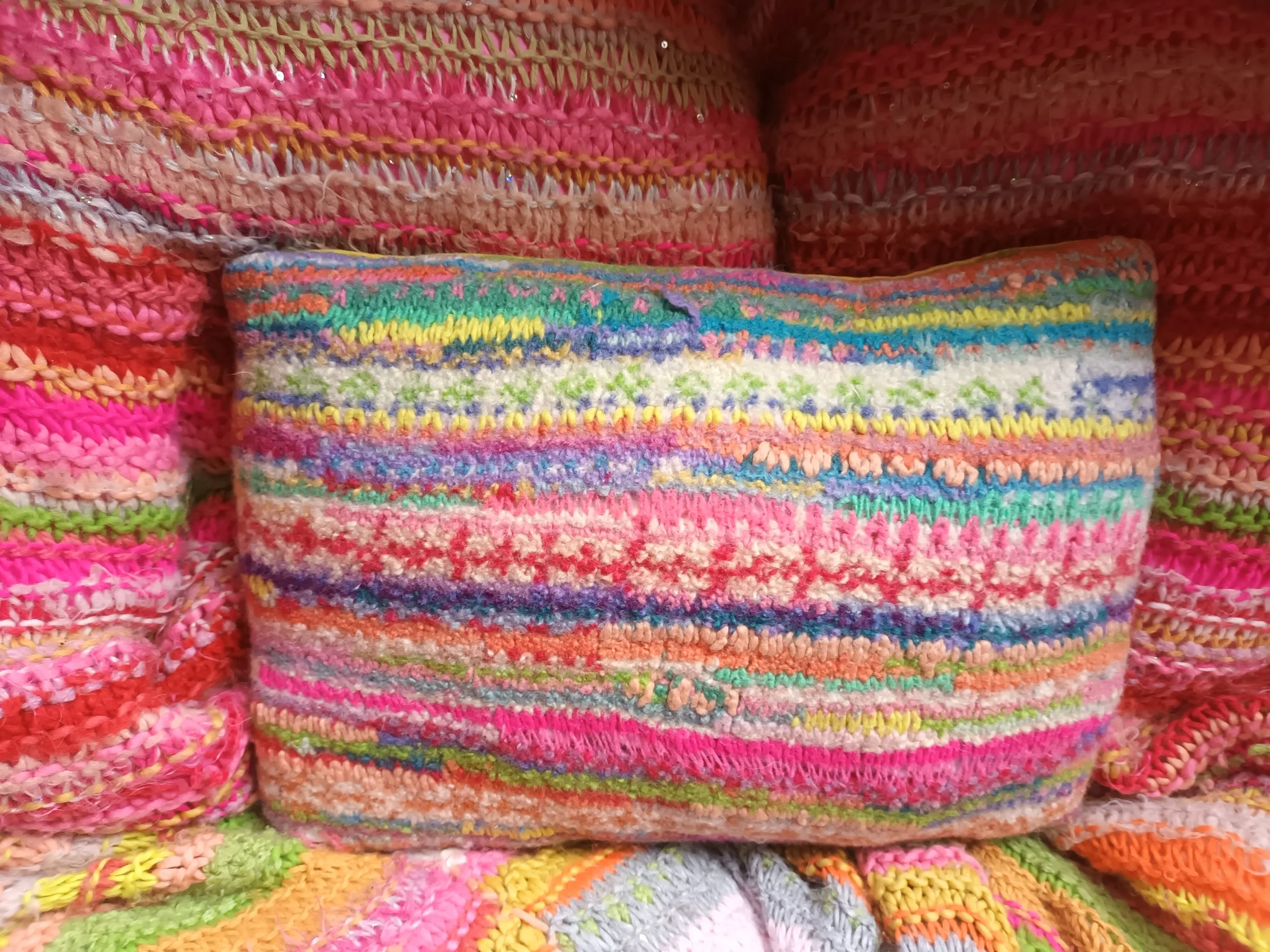
This workshop has been designed by Adrienne to teach basic knitting skills. This includes stocking stitch and casting on and off, in a way to make it as simple as possible for the beginner. It is suitable for both right and left handed learners.
The fun of blending colours of wool is optional and has been added for interest. Multi-coloured wool is also provided.
Adrienne shows you how to felt a piece of knitting, in bowls of warm and cold water. Sometimes, people like to do this to take home their first piece of knitting and to frame it.
Nuno Felted Flowers
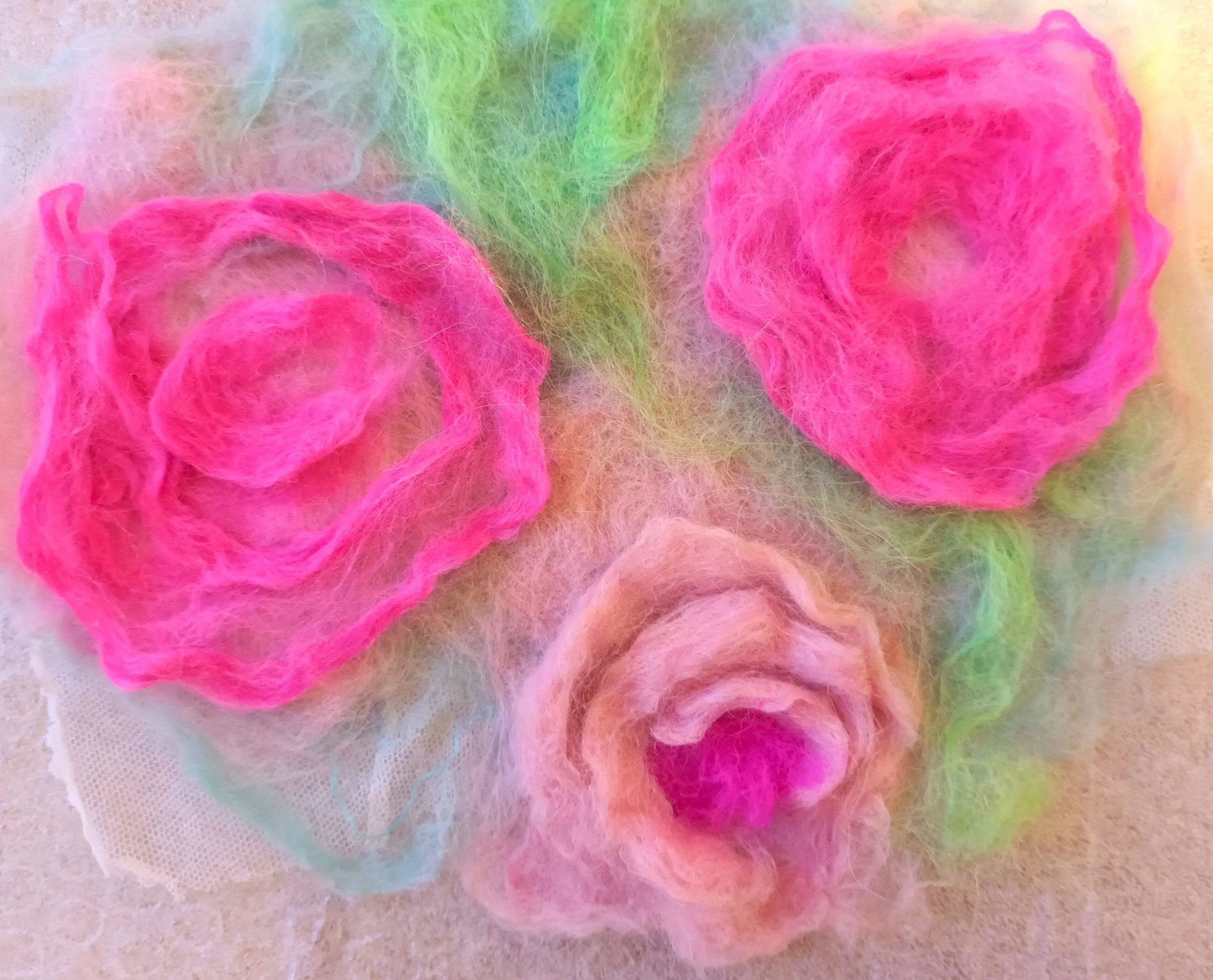
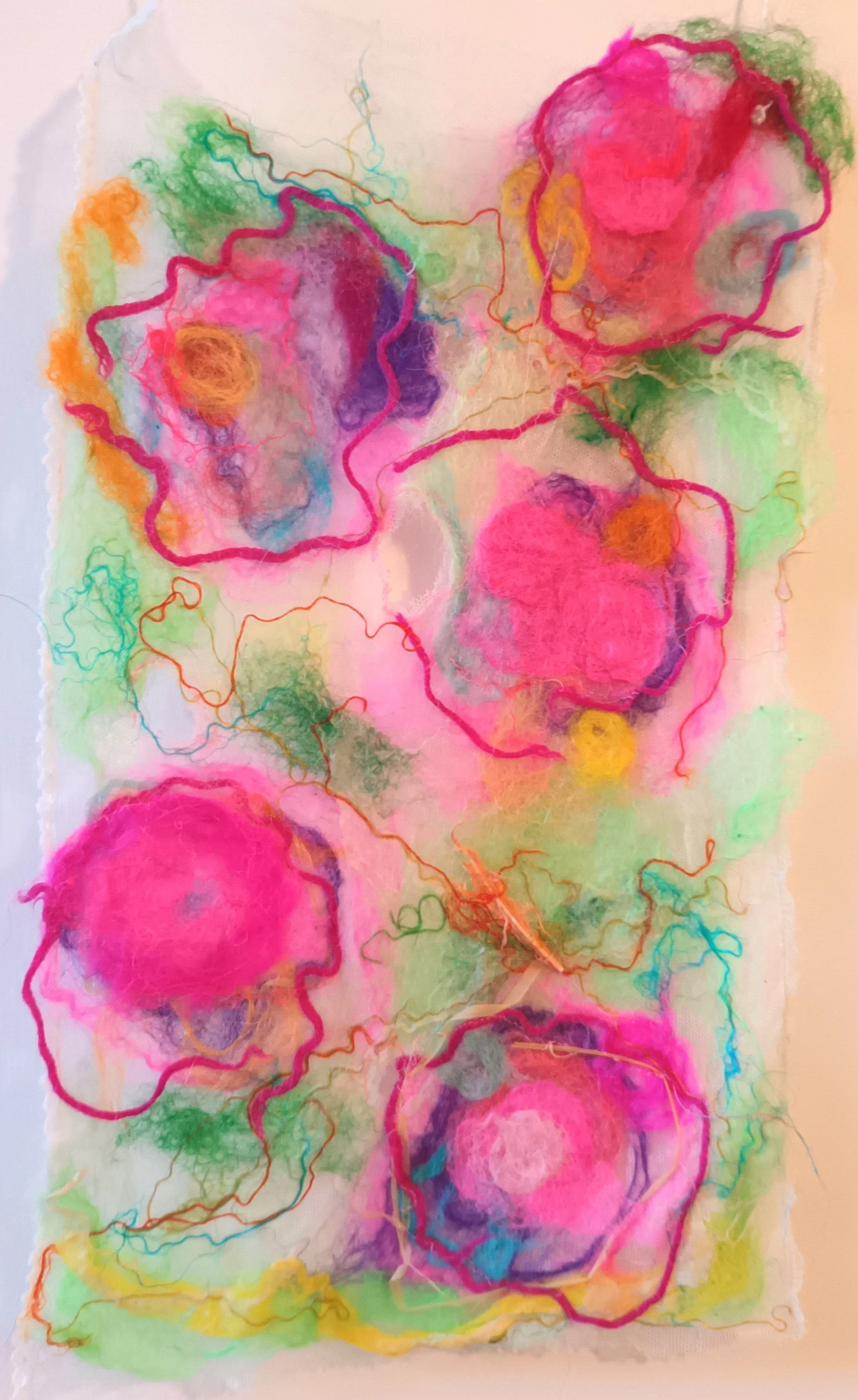
This workshop was inspired by stained glass windows and looking at the work of Charles Rennie Mackintosh. Merino wool tops, silks, lace, wool and other natural materials are layered up onto material such as silk and lace, to create pattern and form. This is a very playful wet felting workshop, where line and pattern can be transformed by felt.
The pieces can be worked into using embroidery, machine embroidery or needle felting.
The workshops are designed to be relaxing and to enable people to enjoy learning a particular skill, whether as a beginner or improver. The artist runs workshops regularly at Liss Yarns, Turtle Bean, The Triangle Centre and Broadlands Meadows Alpaca Farm. Bespoke group workshops can be arranged to suit individual needs and the artist can travel to run a workshop at a venue of choice. It can be great fun to get a group of people together and enjoy felting.
The artist carries a current enhanced DBS check and is happy to work with groups of children and can adapt workshops as necessary.
Wet Felting is an ancient method of making material that has been used for thousands of years to make tents, sleeping bags and carpets. Needle felting was developed in the 1980s and nuno felting in the 1990s.